
Education Project for Immigrants
Due to the civil war that occurred in Syria in 2011, refugees have been forced to migrate to Turkey, which is in a transit position, from this date onwards. With nearly a million school-aged Syrian refugees in our country and in accordance with the right to education, it has been decided after 2016 that Syrian children in Turkey will receive education in Turkish in state schools. Considering the devastating consequences of the war, problems such as integration and adaptation in education for refugee children necessitate the implementation of a special study on behalf of this educational group.
The Definition
In Turkey, especially since 2013, research on Syrian refugees has increased, and many field studies have been conducted, particularly on problems in education. This project is a continuous and sustainable education project proposal for Syrian refugee children, prepared in accordance with the problems and solution suggestions identified in such research.
The Reason
Although the migration of Syrian refugees to Turkey after the civil war is covered by the 1951 Geneva Convention and the 1967 New York Protocol, the situation, being one of the largest migrations in history, has characteristics that exceed both fundamental treaties. Therefore, some special definitions and policies have been necessary. In this context, Syrians have been included under the Temporary Protection Policy (The European Commission refers to this protection as an exceptional measure of protection provided immediately and temporarily in a situation where the return of refugees is not possible).
The migration of Syrian refugees to Turkey after the civil war, although covered by the 1951 Geneva Convention and the 1967 New York Protocol, has characteristics that exceed both fundamental treaties due to it being one of the largest migrations in history. Therefore, some special definitions and policies were required. In this context, Syrians have been included under the Temporary Protection Policy (The European Commission defines this protection as an exceptional measure of protection provided immediately and temporarily in situations where the return of refugees is not possible).
This policy is an emergency policy of an interim nature that fills a gap in the convention regarding mass population movements towards borders. Accordingly, Turkey will host Syrian immigrants accepted under the Open Door Policy with temporary protection status until the situation in Syria returns to normal.
Thus, the temporary protection status also defines a process that involves Syrian refugee and Turkish public actors, which Turkey needs to manage with significant importance. During this process, the adaptation and integration of refugees, which we can describe with a foreign identity, are important for both actors (public and refugee). The group of Syrian children, who constitute the majority of refugees, is the focal point of this process. However, despite policies directed at this group in Turkey – also funded by the European Union – it has remained a problem to be solved according to findings observed in the field and research conducted, because the reason for not producing a real policy has been the definition of the process as temporary.
Looking at the process, it is seen that Syrians gained the right to benefit from education, health, and social assistance services after being granted temporary protection status in October 2014. The same year, education activities for Syrians were standardized with the directive on Educational Services for Foreigners coming into effect. Policies produced on the assumption that Syrians would return to their country have become the source of difficulties experienced today in integrating Syrians into the education system.
During field activities in Istanbul, we identified many needy Syrian families. During our visits, we identified the problems of refugees with primary testimony. The most important of these is that Syrian children are disadvantaged groups in education in Turkey. Due to the effects of the war, language barriers, integration problems, etc., they are far behind their peers in education. And many of them drop out of school to work in heavy jobs.
Especially since 2015, sociological research has focused on this situation in Turkey, and especially problems of integration in education have been explored through case analysis studies in different provinces. The identification of examples from all over our country has justified this problem. Some reports indicate that this problem will create a correlation with an increase in crimes in our country in the future.
Not only those who go to school and are disadvantaged, but also children who do not have a temporary identity document and cannot benefit from the state’s education services exist. Such that they cannot benefit from the right to education. What does the process design for the education of these children? Again, substantial policies cannot be produced for them due to assumptions about their return or the uncertainty in the process. The system of uncontrolledness that the state initially could not design for Syrians has now forced these rigidities. They were the ones trapped and oppressed between policies in every way. They have no rights to education and learning. In this regard, the question of what politics that now deprives children of the right to education has achieved is also irrelevant. All these mistakes have clearly shown why this issue, which should have been resolved within the timeframe covering a generation’s educational life, cannot now be resolved by the system within this timeframe. The fate of the opportunity conducive to the potential success a Syrian student could achieve will be determined by individual relationships. Some teachers, and people who understand their part, will act on their behalf. And it is necessary to be everywhere with small but numerous groups.
These are, of course, secondary reasons that justify the main reason. Our main reason is struggle.
The Purpose
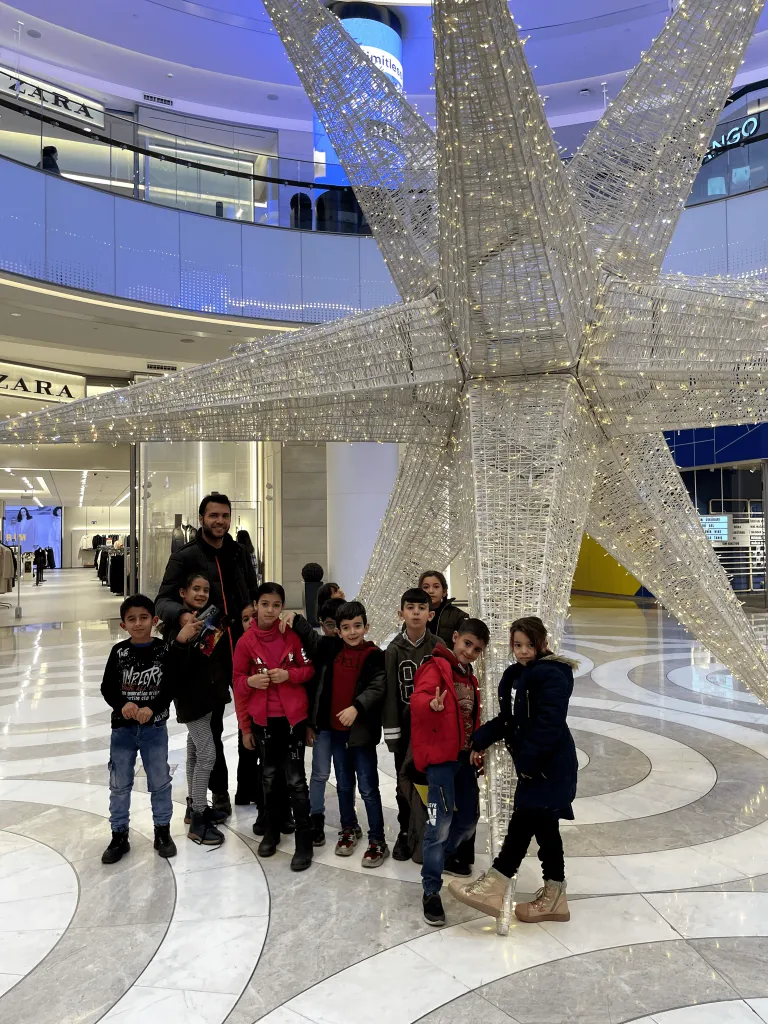
The goal is to eliminate the disadvantaged situation experienced by a single Syrian child in their education, thereby bringing their level to an equal status with their peers. The wishes and dreams of many Syrian students studying in different parts of Istanbul have shown us that being a refugee, the sociological situations within their own families, and falling behind their peers, place them in a situation of lacking certain opportunities in their own educational lives.
This project can be dissolved in a place where justice in the education of a Syrian child is provided, that is, where they can continue and sustain their education among their peers. The ultimate goal is to enable a Syrian child to succeed in entering university. The difficulties in achieving and tracking this outcome make this project challenging in terms of evaluability. In other words, the difficult questions for this project are, “Can we achieve our goals, and when will we be considered to have reached our goals?”
However, by recalling the reason mentioned above and now the goal, we must overcome a difficulty in this question: The aim is to eliminate the disadvantages in the education of disadvantaged Syrian children. If a realistic and testable criterion is to be set, this means bringing them to an equal status with their Turkish peers in terms of opportunities. For a Syrian child starting school, this specifically means knowing Turkish, then mathematics, and then the basic subjects as well as their peers.
We have found that Syrian children, especially because they carry a sense of foreignness, are far behind their peers in terms of the vision they have for their own futures. With a foreignness astonishment, the uncertainty in their situation has also permeated their understanding of education. That is, due to the ambiguity in determining their own steps, they need guidance.
With these, we can narrow down and redefine the goal: These children should be freed from the deprivation that prevents them from realizing their potential. They should be brought to an equal level with their peers in Turkish and then in basic subjects. Thus, the disadvantages should be eliminated as soon as possible for their educational lives, which we assume will continue in Turkey. When this justice is provided throughout their educational life here, they will reach a position where they can determine their own fates.
The purpose of this project is not to appoint a tutor or tutors for a Syrian child and take over their entire educational life. The goal is the rapid elimination of disadvantaged situations. The criteria for achieving this goal are specified in the method section.
The Method
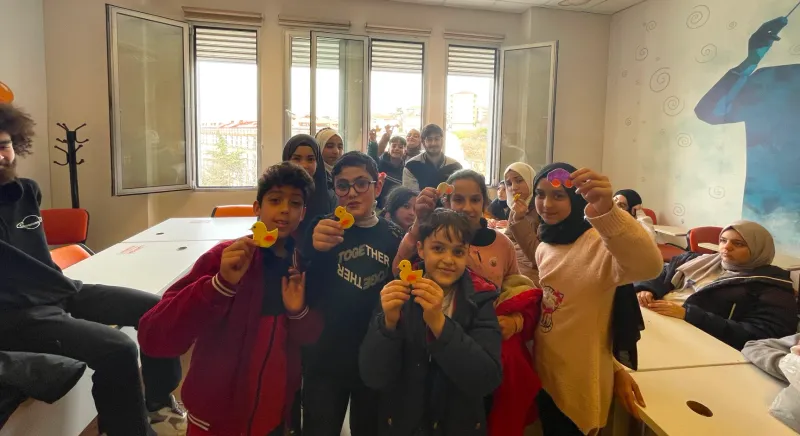
Since the goal is to eliminate disadvantages, any method will always try to answer the question: “When will we be considered to have reached our goals?” That is, “When have we addressed the student’s deficiencies, brought them to an equal level in terms of opportunities, and they are now ready to continue their education?” A method that wants to answer this question should have two pieces of information at its disposal. Where the children should be and their current knowledge.
For example, a Syrian child starting 1st grade is not expected to know how to read and write in Turkish, but they are expected to have the ability to speak and understand as well as a Turkish child of that age. Their inability to meet these requirements causes them to fall behind in their education. Therefore, eliminating disadvantages for a refugee child in this group means providing support in every aspect, such as reading, writing, understanding, and listening in Turkish, for their education.
Ultimately, this question will be asked for every child. While the question of where each should be can be more easily determined as it will contain similar answers, their current situations will yield more varied responses.
The method in this study will reference the curriculum of the class they are in within the M.E.B (Ministry of National Education) education system. In the first stage, it will show what the student should know and what they should be learning, in the second stage, it will compare the student’s situation with the data from the results of the first stage to identify deficiencies, and in the third stage, it will prepare an educational program over time according to these deficiencies.
The parameters at each stage of this method will vary for each student group and will not be detailed here. Only the method template of the project is presented.
An Epilogue in 2024
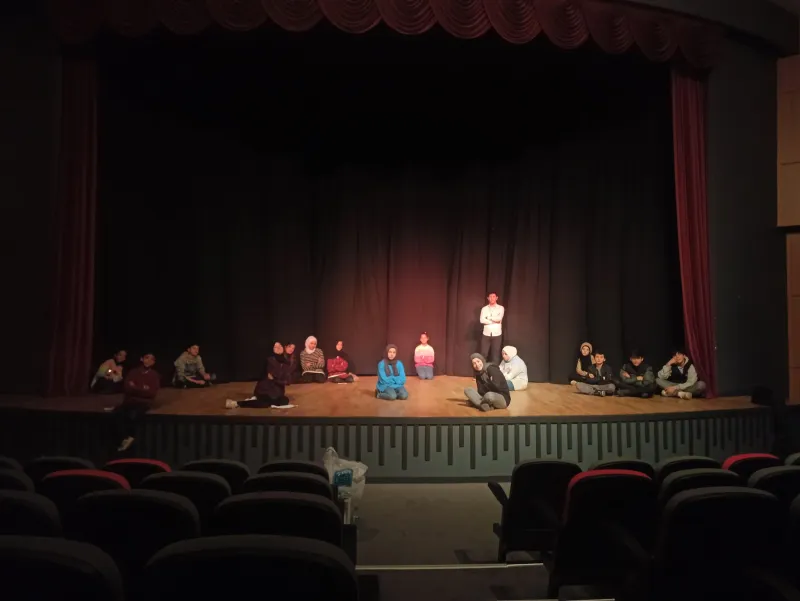
We are pleased to have friends who have long made such a cause their concern. Because not being racist required courage. It has been quite some time since we carried out this project on various groups. And things have only gotten worse. In the end, people caused these for very small –even imaginary– goals. Despite this, we are choosing our side in history.